
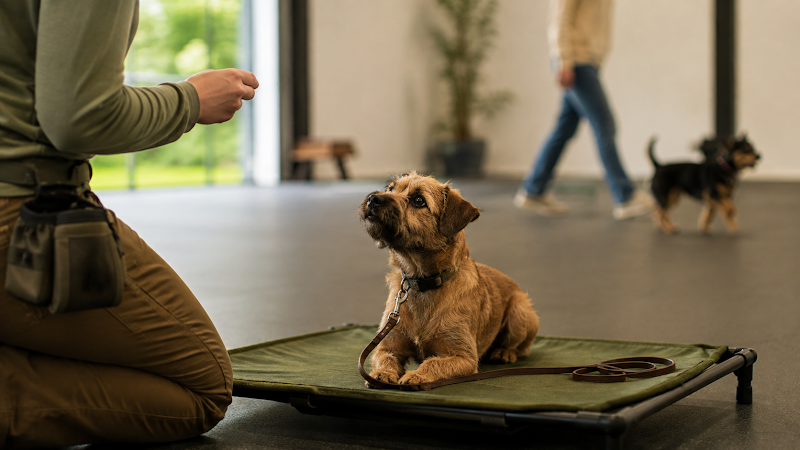
Small dogs learn the same basic skills as larger dogs, but the training environment can feel very different when you're working with a 10-pound dog at ankle height. Good small dog training classes account for those practical differences while still teaching the everyday behaviors every dog needs: recall, leash manners, settling, handling, and calm responses around distractions.
The goal isn't to treat small breeds as fragile or less capable. It's to choose a program where the pace, equipment, exercises, and social environment help your dog learn confidently.
Key takeaways
- Small breeds don't need easier training. They need training that accounts for their size, comfort, temperament, and environment.
- Class size and instructor attention can matter as much as the curriculum.
- Puppy classes, manners classes, private lessons, and continuing programs solve different problems.
- Reward-based teaching is a sound starting point for building new skills and confidence.
- The best program is one that helps you reproduce the dog's success outside the training facility.
What small dogs actually need from training
A Chihuahua, Havanese, Miniature Schnauzer, and Toy Poodle may all fit under the broad label of "small dog," but that doesn't mean they learn or behave alike. Breed tendencies, age, previous experiences, motivation, and individual temperament usually tell you more than body weight alone.
What size does change is the dog's experience of the environment.
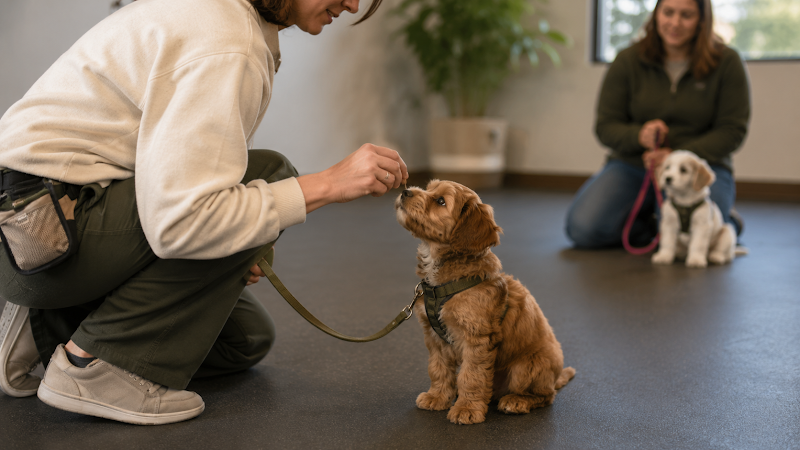
A person leaning over a small dog takes up much more of that dog's visual field. A greeting from an enthusiastic 70-pound dog can be physically intimidating. A standard-height "place" platform may require more effort to step onto. Even leash handling feels different when the dog is only several inches off the ground.
That makes context especially important.
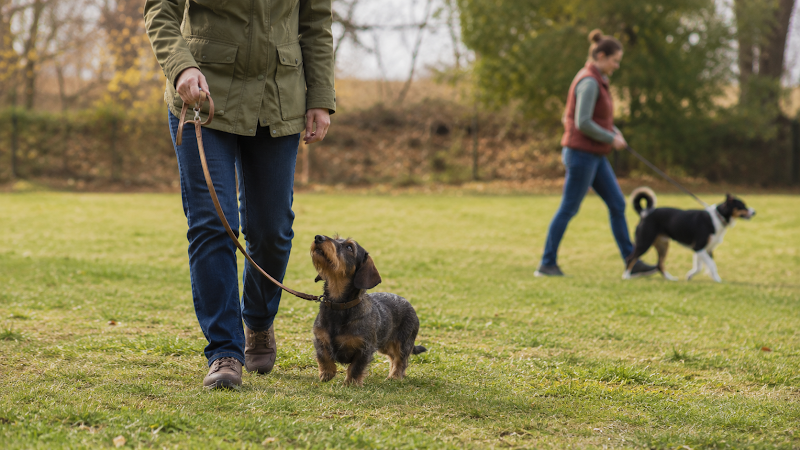
A useful training program should teach skills in situations the dog will actually encounter. For a small companion dog, that might mean remaining calm while someone approaches, walking without weaving around feet, coming when called in a distracting area, settling on a mat, tolerating routine handling, and passing other dogs without barking or lunging.
The American Kennel Club's Canine Good Citizen program is a helpful example of this practical approach. Its 10 skills focus on everyday manners, handling, supervised separation, interactions with people, and reactions to distractions rather than tricks that only work in a quiet training room.
Don't mistake carrying for management
One habit worth addressing early is automatically picking up a small dog whenever something gets difficult.
There are times when carrying your dog is appropriate for safety. But if the dog is routinely lifted whenever another dog appears, a visitor arrives, or the sidewalk gets busy, they lose opportunities to practise the behavior you eventually want.
A trainer may instead create enough distance for the dog to stay comfortable, reward calm attention, and gradually work closer to the distraction. The dog learns what to do rather than simply being removed every time.
That distinction is easy to miss with small breeds because picking them up is so convenient.
Choosing the right type of small dog training class
Searching for small dog training classes near me will usually bring up everything from puppy groups to private behavior consultations. Those services aren't interchangeable. The right starting point depends on what your dog needs to learn.
Puppy classes build the foundation
For a young puppy, structured classes can combine obedience with controlled exposure to people, environments, handling, and other dogs.
Socialization should not mean turning puppies loose together and hoping they figure things out. The important part is helping the puppy form safe, manageable experiences with the world around them. The AKC notes that the first months of puppyhood are an important period for exposure to different people, places, surfaces, sounds, and situations.
A concrete example of useful class design is a seven-week Puppy 101 program with 45-minute sessions and a maximum of eight puppies. That structure gives an instructor room to work on obedience, leash manners, crate and potty training, socialization, and common puppy behaviors without putting too many young dogs in the same room.
You can see the current puppy and obedience training program formats, including options that progress from puppy foundations into distraction training and longer-distance recall work.
Group manners classes add controlled distractions
Once a dog understands a cue at home, the next challenge is performing it somewhere interesting.
This is where a small group class earns its value. Your dog may already sit immediately in the kitchen but struggle when another dog enters the room or someone walks past holding treats.
A class designed around manners can introduce those distractions gradually while teaching you how to maintain your dog's attention. For example, a four-week Basic Manners I format with 45-minute sessions and no more than six dogs allows more room for individual feedback while still providing the distraction value of a group.
This kind of class can be a strong next step for dogs over six months that already have some foundation skills but need more practice using them around other dogs and people.
Private training makes sense when the problem is highly specific
Not every small dog benefits from beginning in a group.
Consider a dog that barks continuously at unfamiliar dogs from 30 feet away. Putting that dog directly into a room with five other dogs may make learning harder, not easier. A private session lets the trainer assess the behavior without adding more intensity than the dog can manage.
Private work can also help when your priority is very specific, such as:
- refusing to walk in the neighborhood,
- guarding food or objects,
- becoming frightened during handling,
- reacting strongly to visitors,
- struggling with household boundaries,
- or failing to respond to cues despite previous classes.
A good trainer should be willing to recommend private instruction when a group setting isn't appropriate rather than placing every dog into the same program.
Continuing classes keep skills from becoming "training-room only"
Graduating from one course doesn't mean training is finished.
Dogs become good at behaviors they practise. A dog that only rehearses heel, stay, or recall during an occasional formal session may gradually become less reliable when distractions increase.
Continuing programs can solve that problem by placing familiar skills back into challenging but controlled situations. Continuing dog training options may include drop-in obedience, manners work, agility introductions, Canine Good Citizen preparation, and other structured activities.
For a small dog, this is particularly useful when you want calm behavior around bigger dogs, unfamiliar people, movement, and noise without expecting uncontrolled interaction.
What to look for in a small dog training school
The phrase small dog training school can describe very different operations. Before enrolling, look beyond the program name and ask how training is actually conducted.
Start with the learning environment.
How many dogs are enrolled? Are dogs given enough physical space? Does the trainer control greetings rather than allowing every dog to meet? What happens if one dog becomes overwhelmed? Can the instructor modify an exercise for a very small dog?
Six thoughtfully managed dogs may provide a better learning environment than 15 dogs squeezed into the same room.
Ask how new behaviors are taught
Training methods matter because learning isn't only about whether a dog eventually performs a command. You also want to consider the dog's comfort and willingness to participate.
The American Veterinary Society of Animal Behavior states that reward-based methods should be used for teaching skills and addressing behavior problems. Its position statement also emphasizes teaching dogs what to do and arranging the environment so appropriate behavior is easier to perform.
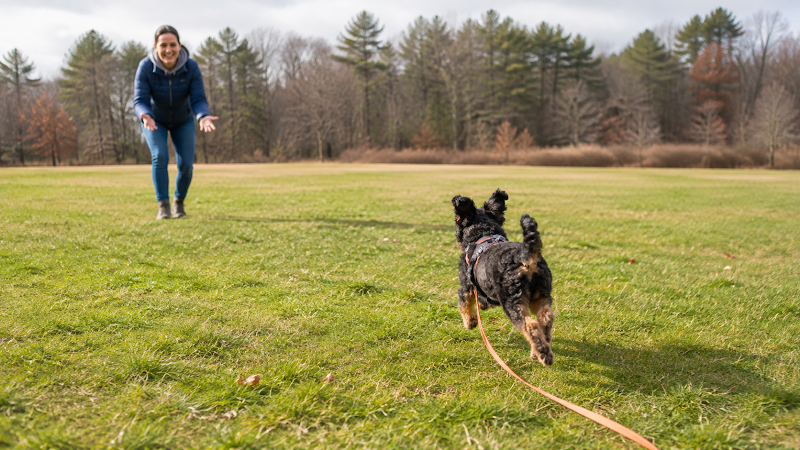
Research published in Frontiers in Veterinary Science also compared professional training approaches for dogs with off-leash behavior problems. In measures where the groups differed significantly, the reward-focused group performed better on response to "come" and "sit," and researchers found no evidence that electronic collars were necessary for effective recall training.
When visiting a facility, ask a straightforward question: "How will you teach my dog a new behavior when they don't understand what you're asking?"
The answer tells you much more than a label such as "positive," "balanced," or "obedience training."
Look at how the trainer handles stress
A small dog trembling, freezing, hiding behind the owner, repeatedly trying to escape, or refusing normally desirable food may need the exercise adjusted.
That isn't the same as allowing the dog to avoid every challenge. Good training can involve gradual exposure to difficult situations. The important part is whether the trainer can lower the difficulty enough for learning to resume.
This is especially relevant if your dog is nervous around larger dogs. "Socialization" shouldn't require putting a frightened 12-pound dog into uncontrolled play with much bigger dogs.
Check whether you are being trained too
A dog can perform beautifully for a professional and still struggle at home if the owner doesn't understand the process.
The best dog training facilities near me aren't necessarily the places producing the most impressive demonstration videos. Look for trainers who explain:
- what cue to give,
- when to reward,
- how long to practise,
- what to do after a mistake,
- how to increase distractions,
- and when to make an exercise easier.
You should leave knowing how to continue the work yourself.
How to make training carry over at home
One of the biggest gaps in obedience training appears between "my dog knows this" and "my dog can do this anywhere."
Dogs don't automatically generalize a behavior across every setting.
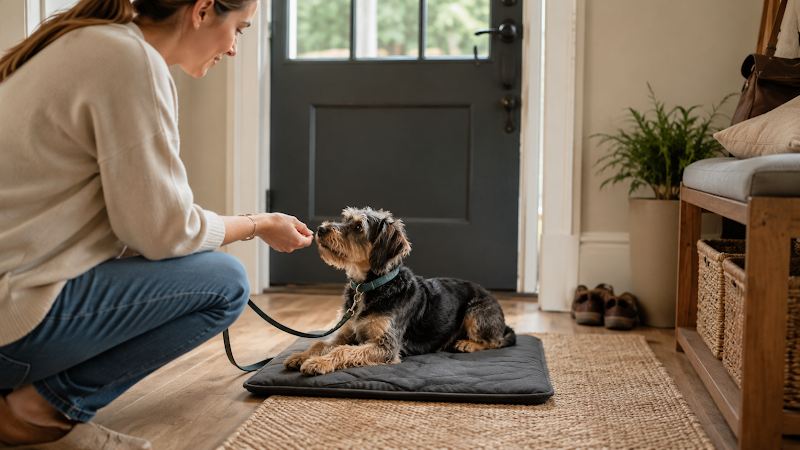
Suppose your small dog learns "place" on a mat in class. At home, you practise on the same type of mat in the kitchen. Then you move it to the living room. Later, you practise while someone knocks on the door. Eventually, the mat comes with you to a patio or another dog-friendly setting.
The cue stays the same. The environment becomes harder in small increments.
That progression is far more useful than repeating the easiest version hundreds of times.
Use short sessions with a clear purpose
You don't need a 45-minute home lesson every evening.
Five focused minutes spent practising one skill can be productive, particularly when you know what you're trying to improve. A simple session might look like this:
- Practise five easy recalls indoors.
- Move to the yard and repeat with mild distractions.
- Reward quickly when the dog responds.
- Stop before attention drops significantly.
- Try again later in a slightly different location.
The important variable isn't session length. It's whether your dog is successfully rehearsing the behavior you want.
Increase only one difficulty at a time
A common training mistake is making everything harder simultaneously.
An owner practises "stay" in the kitchen at three feet, then tries the same cue 20 feet away at a crowded park. Distance, duration, and distraction have all increased at once.
Instead, change one variable.
If you increase distance, keep distractions low. If you move somewhere busier, shorten the distance. If you ask for a longer stay, remain nearby.
This approach is useful for any dog, but it can make a major difference for small breeds that become cautious or highly alert in busy environments.
Build skills around the life you actually have
Training should solve real problems.
If you live in an apartment, calm hallway and elevator behavior may matter more than a formal heel. If you frequently visit family, settling while people eat may be the priority. If you walk in a busy neighborhood, passing dogs calmly and responding to recall deserve regular practice.
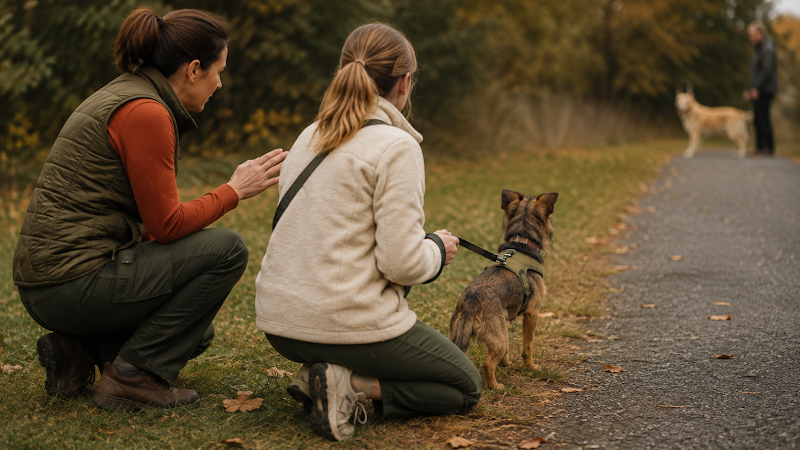
That is the standard to use when comparing programs. Don't ask only, "What commands will my dog learn?"
Ask, "Where will I need these behaviors to work?"
The right small dog training classes should give you a clear path from learning a cue to using it in everyday life.
Choosing a program your small dog can succeed in
Small dogs don't need a watered-down obedience program. They need appropriately designed training that considers the dog's temperament, physical size, current skills, and the situations the owner wants to handle better.
Look for manageable class sizes, clear instruction, thoughtful exposure to distractions, and a trainer who can explain how each exercise transfers into daily life. If your dog can perform the skill outside class and you know how to maintain it, the training is doing its job.
FAQs
At what age should a small dog start training classes?
Training can begin during puppyhood with age-appropriate exercises. Puppy programs often combine basic cues with handling, leash skills, crate training, and carefully managed socialization. Older dogs can start training as well, so missing puppy classes doesn't mean you've missed your opportunity.
Are small dog training classes different from regular dog classes?
They don't necessarily need a completely different curriculum. Small dogs still benefit from recall, leash manners, stays, settling, and polite greetings. What may need to change is equipment fit, physical setup, interaction with larger dogs, and how exercises are presented.
Are group classes safe for very small dogs?
They can be when the class is well supervised and interactions are controlled. Ask about class size, dog-to-dog greetings, play policies, and what instructors do when a dog becomes uncomfortable. Very fearful or reactive dogs may be better suited to private training first.
How do I find good small dog training classes near me?
Compare more than distance and price. Ask about class size, curriculum, instructor qualifications, training methods, how dogs are grouped, and what happens if your dog struggles in class. Visiting the facility or scheduling an evaluation can also tell you whether the environment fits your dog.
Is private training better than group training for a small dog?
Neither is automatically better. Group classes are useful for practising around controlled distractions, while private sessions allow concentrated work on individual behavior or handling concerns. Some dogs benefit from starting privately and moving into a group once they have stronger foundation skills.
What should I bring to a small dog training class?
Follow the facility's instructions, but you may be asked to bring your dog's regular training equipment and suitable rewards. Make sure any collar or harness fits correctly and cannot slip over your dog's head. For puppies, check the facility's vaccination and health requirements before attending.
How long does it take for obedience training to work?
There isn't a fixed timeline because the behavior, dog, environment, and amount of practice all matter. You may see individual skills improve quickly, but reliable behavior around distractions generally requires repetition in several settings. Consistent practice between classes is what turns a newly learned cue into an everyday habit.